Blog
The OCaml Planet RSS
Articles and videos contributed by both experts, companies and passionate developers from the OCaml community. From in-depth technical articles, project highlights, community news, or insights into Open Source projects, the OCaml Planet RSS feed aggregator has something for everyone.
Want your Blog Posts or Videos to Show Here?
To contribute a blog post, or add your RSS feed, check out the Contributing Guide on GitHub.
Got TESSERA working in Zarr and the browser, and a preprint of package management a la carte pushed out
Over the past year I’ve been spending a lot of time building Tree-sitter-powered major modes for Emacs – clojure-ts-mode (as co-maintainer), neocaml (from scratch), and asciidoc-mode (also from scratch). Between the three projects I’ve accumulated enough knowledge (and battle scars) to write about the experience. This post distills the key lessons for anyone thinking about writing a Tree-sitter-based major mode, or curious about what it’s actually like.
Over the past year I’ve been spending a lot of time building TreeSitter-powered major modes for Emacs – clojure-ts-mode (as co-maintainer), neocaml (from scratch), and asciidoc-mode (also from scratch). Between the three projects I’ve accumulated enough battle scars to write about the experience. This post distills the key lessons for anyone thinking about writing a TreeSitter-based major mode, or curious about what it’s actually like.
The problem statement: no isolation, no standard packaging, no OTA updates. Three missing pieces for multi-tenant satellite payloads.

A few years ago I wrote about setting up Emacs for OCaml development. Back then the recommended stack was tuareg-mode + merlin-mode, with Merlin providing the bulk of the IDE experience. A lot has changed since then – the OCaml tooling has evolved considerably, and I’ve been working on some new tools myself. Time for an update.
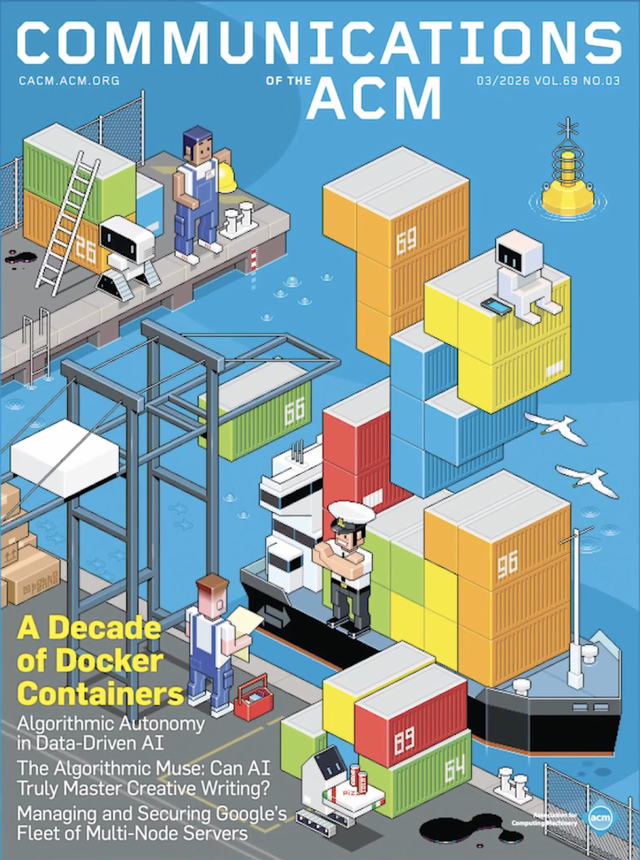
Our CACM cover article reflects on a decade of Docker, from the early days of hacking Docker for Mac on a French farm to today's AI-driven sandboxing, covering the technical origins, cross-platform challenges, and the vibrant open-source community that made it all possible.
The ASPLOS unikernels paper won its test-of-time award in 2025. Twelve years later, where does the thesis hold?
TESSERA paper accepted at CVPR 2026, went to the AI Impact Summit, OCaml Zarr hacking, Shriram's talk on human factors of formal methods, and discussions on teaching OxCaml to agents.