Blog
The OCaml Planet RSS
Articles and videos contributed by both experts, companies and passionate developers from the OCaml community. From in-depth technical articles, project highlights, community news, or insights into Open Source projects, the OCaml Planet RSS feed aggregator has something for everyone.
Source
Keyword
Year
Author
Want your Blog Posts or Videos to Show Here?
To contribute a blog post, or add your RSS feed, check out the Contributing Guide on GitHub.
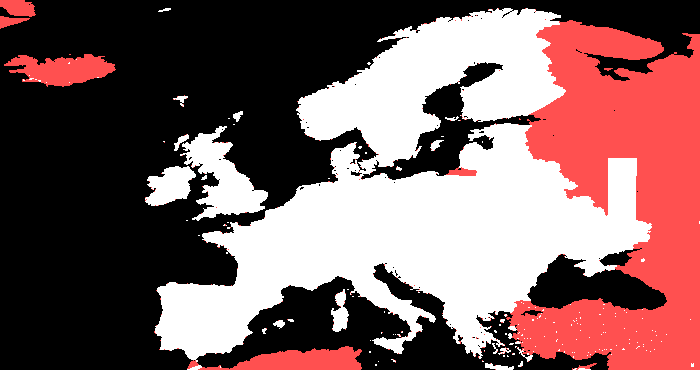
Tessera produces global land-cover embeddings at 0.1-degree resolution, roughly 11 km square at the equator. For each year and each grid tile, there is a directory containing NumPy files of the embeddings.
Following on from the Arm32 multicore backend, I have now ported the remaining two 32-bit architectures to OCaml 5 with multicore support: i386 and PowerPC 32-bit (PPC32).

Running OCaml 5 with multicore support on bare-metal Raspberry Pi Pico 2 W (RP2350, ARM Cortex-M33).

Recently, I have been using my Pi Zero (armv6), which has reminded me that OCaml 5 dropped native 32-bit support, and I wondered what it would take to reinstate it.
I am grateful for Tarides’ sponsorship of my OCaml work. Below is a summary of my activities in Q2 2025.

I hadn’t intended to write another post about traversing a directory structure or even thinking about it again, but weirdly, it just kept coming up again!
As @dra27 suggested, I first added support in ocurrent/ocaml-version. I went with the name flambda2, which matched the name in the opam package.