Blog
The OCaml Planet RSS
Articles and videos contributed by both experts, companies and passionate developers from the OCaml community. From in-depth technical articles, project highlights, community news, or insights into Open Source projects, the OCaml Planet RSS feed aggregator has something for everyone.
Source
Keyword
Year
Author
Want your Blog Posts or Videos to Show Here?
To contribute a blog post, or add your RSS feed, check out the Contributing Guide on GitHub.
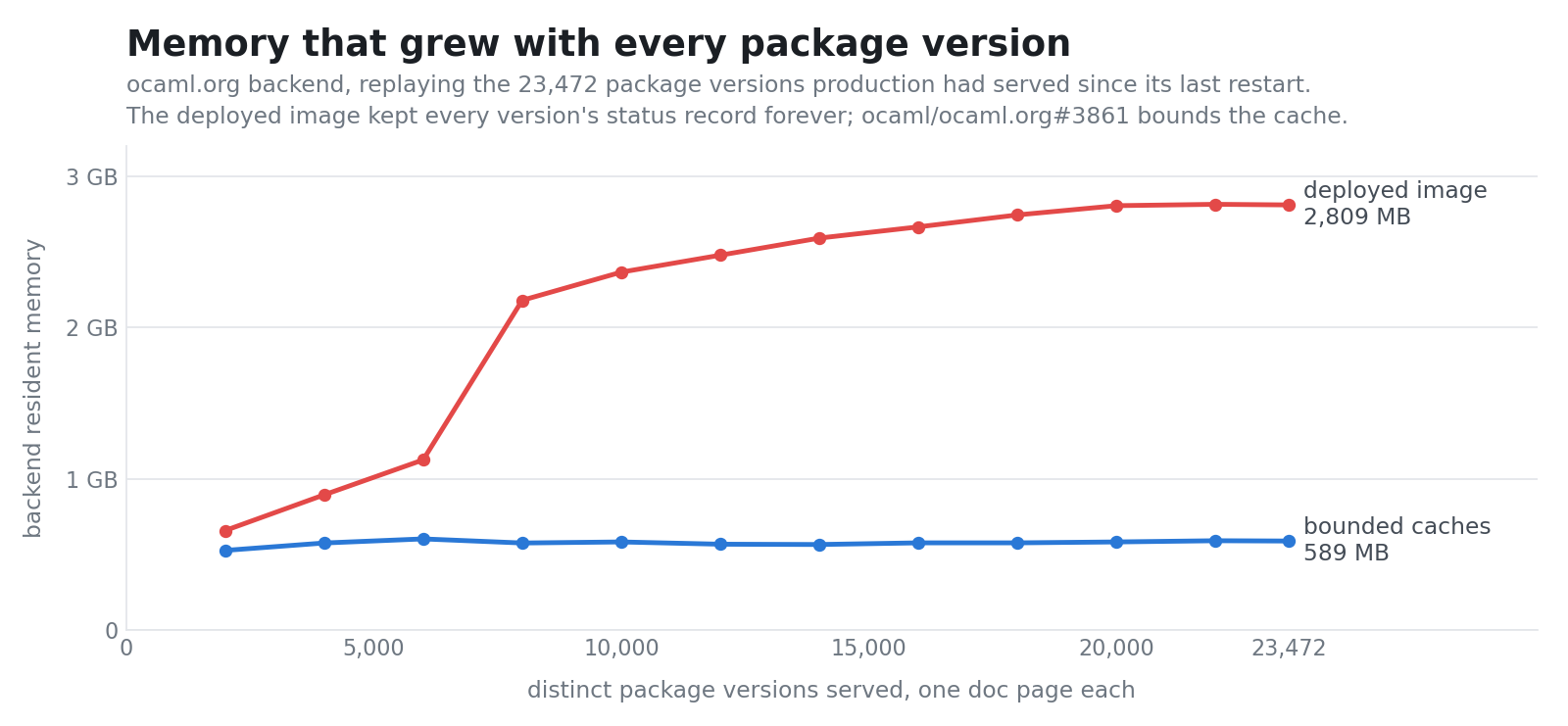
ocaml.org memory and CPU improvements; the first Tessera block processed straight into the Zarr store; a CephFS kernel bug that returned zeros for files that were fine; and day10 updates.
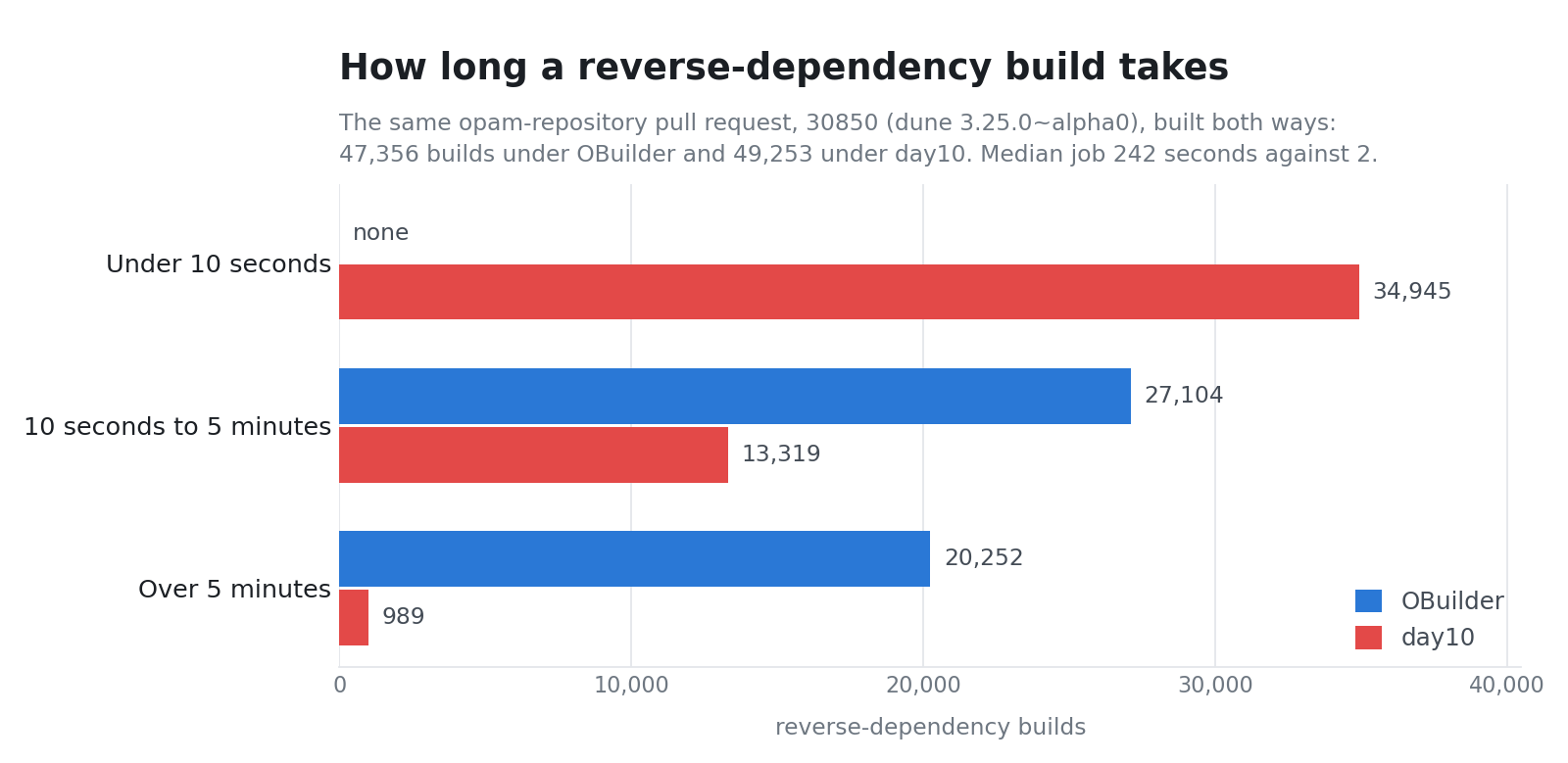
day10 reverse dependencies are live and found a dune regression; the aardvark 2017 run finished; and the v2~beta1 Zarr store was rebuilt on a grid that no longer depends on its own data.
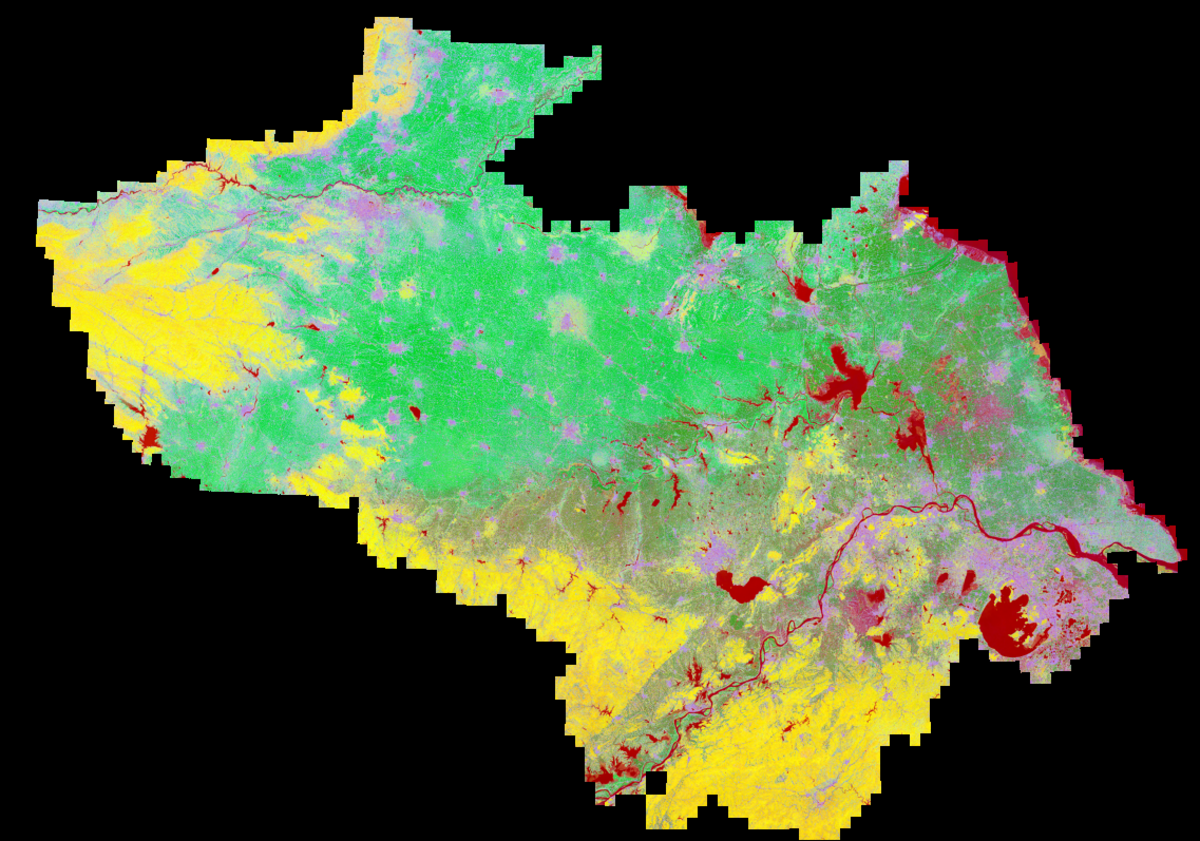
Fast Tessera inference that brings one Xeon node level with a GPU; reverse dependencies in day10; Windows, macOS and FreeBSD worker updates and a new ad hoc pipeline engine.
The icechunk to zarr conversion finished, although not when I said it had; benchmarking Tessera inference on Intel’s AMX silicon; and day10 spreading to four architectures while finding real bugs.
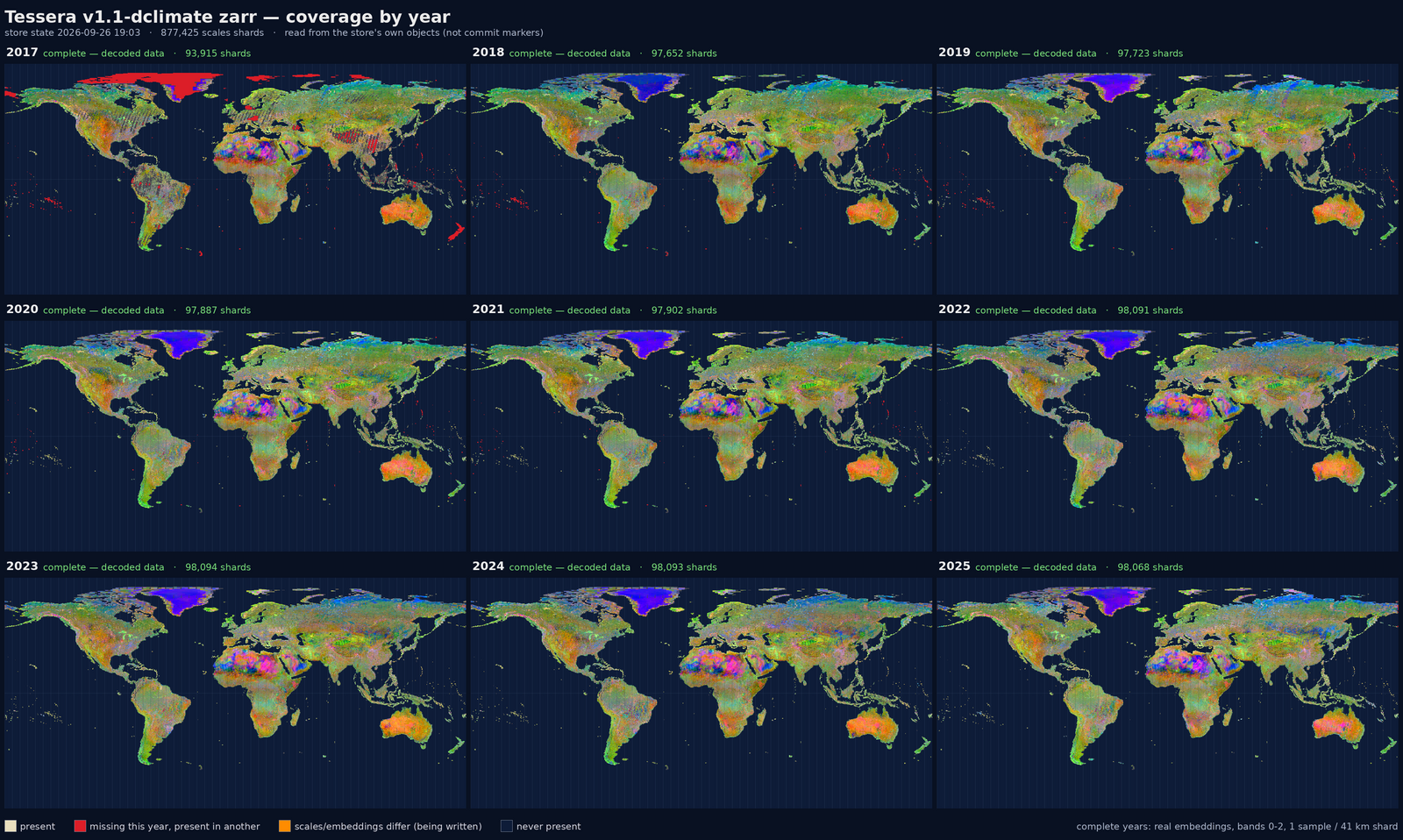
Converting icechunk to zarr using Fargate workers; rebuilding the Tessera dispatcher around Zarr shards instead of 0.1 degree tiles, and day10 going live with all amd64 distributions.
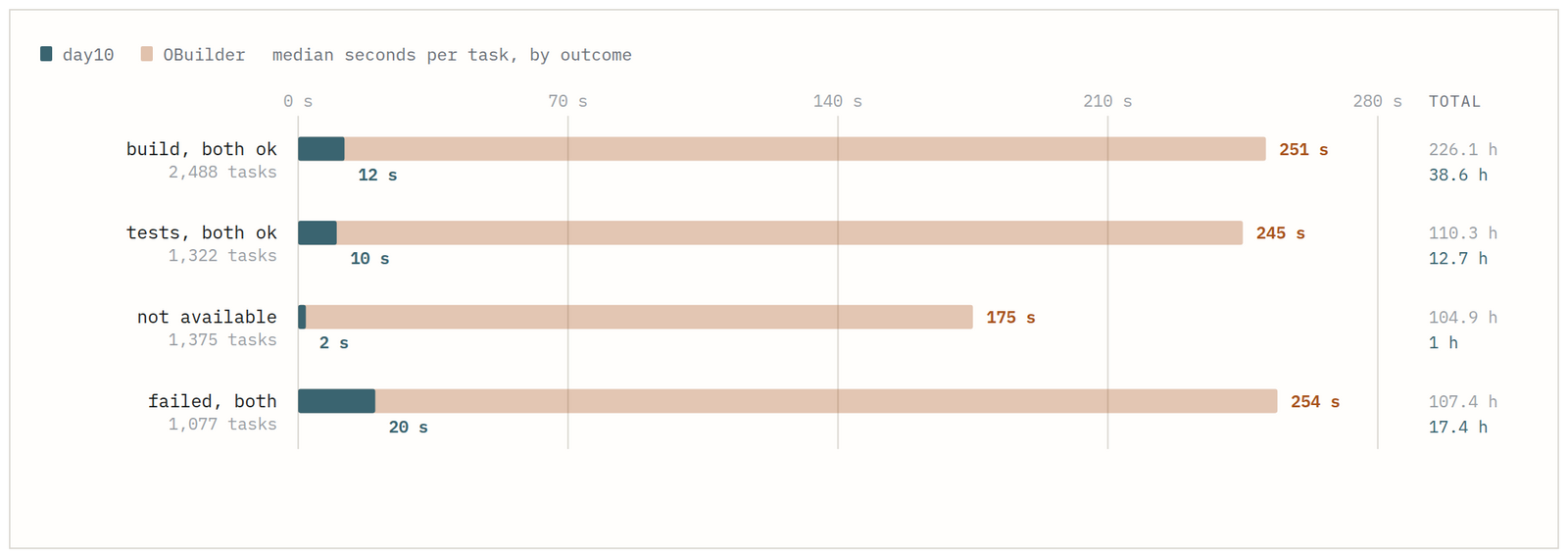
Today, looking at my OxCaml inference engine, I wanted to see whether day10 build . could build an OxCaml project.

Last month, I wrote a walkthrough on using mtelvers/day10 and while stuck in traffic yesterday, I was thinking about all those individual opam files which are read for every solve.

My typical OCaml development workflow starts with git clone ..., then opam switch create . 5.4.1 --deps-only followed by dune build. This creates a local _opam directory containing the compiler and all dependencies. It works well, but the _opam directories add up, and the build takes time.