Blog
The OCaml Planet RSS
Articles and videos contributed by both experts, companies and passionate developers from the OCaml community. From in-depth technical articles, project highlights, community news, or insights into Open Source projects, the OCaml Planet RSS feed aggregator has something for everyone.
Want your Blog Posts or Videos to Show Here?
To contribute a blog post, or add your RSS feed, check out the Contributing Guide on GitHub.
Multicore OCaml, by Stephen Dolan, Leo White, Anil Madhavapeddy (University of Cambridge). Currently, threading is supported in OCaml only by means of a global lock, allowing at most thread to run OCaml code at any time. We present ongo- ing wo...
Introduction to 0install by Thomas Leonard 0install (pronounced “Zero Install”) is a decentralised cross-platform package manager. “Decentralised” means that organisations and individuals can host their software in their own package repositorie...
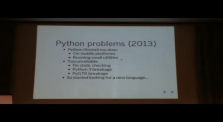
Improving Type Error Messages in OCaml, by Arthur Charguéraud (INRIA & Université Paris Sud) Cryptic type error messages are a major obstacle to learning OCaml. In many cases, error messages cannot be interpreted with- out a sufficiently-precis...
High Performance Client-Side Web Programming with SPOC and Js of ocaml - by Mathias Bourgoin and Emmmanuel Chailloux (Université Pierre et Marie Curie) We present WebSpoc, an OCaml GPGPU library targeting web applications that is built upon SPO...
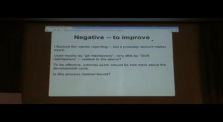
Github Pull Requests for OCaml development - a field report, by Gabriel Scherer On 2014/01/30, we started an experiment allowing users to submit and discussion patches to the OCaml distribution on its Github mirror rather than through the exist...
Ephemerons meet OCaml GC, by François Bobot Garbage collectors (GCs) manage the memory for the programmers and help to ensure the safety of the programs by freeing memory only when it cannot be used anymore. GCs detect that a memory block can’...
Coq of OCaml, by Guillaume Claret The CoqOfOCaml project is a compiler from a subset of the OCaml language to the Coq programming language. This com- piler aims to allow reasoning about OCaml programs, or to im- port existing OCaml libraries in...
A Proposal for Non-Intrusive Namespaces in OCaml, by Pierrick Couderc (I), Fabrice Le Fessant (I+O), Benjamin Canou (O), Pierre Chambart (O); (I = INRIA, O = OCamlPro) We present a work-in-progress about adding namespaces to OCaml. Inspired by ...